Posts

Charonia Research Children's Book - Promotional Video

Image
https://archive.org/details/charonia-childrens-book This book includes the four short stories: Don't Blame Me, What We Like To Eat, Dan The Diver Joins STEM Club, and Dan The Diver And SCUBA."Don't blame me," said the little boy. "The problem with our oceans is that they're huge.""That's what I've been telling them for 60 years," said Paddy the Starfish."I'm just a baby, so don't blame me" said Junior to Bubbles the slug. "The problem is up there"."Something must have changed, but what was it?" said Angel Fish. "I suspect lots of things"."I know that you're talking about me," said Thorny passing by quickly for good reason."I know that you're here somewhere, Thorny" said Dan the diver. "You can't outrun me"."You won't get away next time Thorny," said Triton. "Your days are numbered"."That's all right for you to say T...

Charonia Research Children's Book

Image
This book includes the four short stories: Don't Blame Me, What We Like To Eat, Dan The Diver Joins STEM Club, and Dan The Diver And SCUBA."Don't blame me," said the little boy. "The problem with our oceans is that they're huge.""That's what I've been telling them for 60 years," said Paddy the Starfish."I'm just a baby, so don't blame me" said Junior to Bubbles the slug. "The problem is up there"."Something must have changed, but what was it?" said Angel Fish. "I suspect lots of things"."I know that you're talking about me," said Thorny passing by quickly for good reason."I know that you're here somewhere, Thorny" said Dan the diver. "You can't outrun me"."You won't get away next time Thorny," said Triton. "Your days are numbered"."That's all right for you to say Triton," said Nudibranch. "You have a shell...

Saving Samantha

Image
  In the vast, vibrant blue expanse of the Pacific Ocean, where the coral reefs burst with life and schools of fish dart about, lives our heroine, Samantha. Samantha isn't just any inhabitant of this bustling marine metropolis - she's a majestic shark, a sentinel of the sea, and a guardian. But Samantha isn't alone in her mission. Alongside her is the Māori Wrasse and Giant Triton, other formidable predators of the coral reefs. These predators play a critical role in maintaining the balance of life under the sea. They keep the populations of all other species in check, ensuring the health and diversity of our marine ecosystems. However, Samantha and her beloved home are in danger. The oceans, once teeming with life, are facing threats that could change them forever. It's up to us to help Samantha and ensure the survival of these underwater wonderlands. "Saving Samantha" is more than just a story. It's a journey into the heart of the ocean, a call to action...

The Northern Star and "The Association".

Image
  A collection of newspaper articles on the Northern Star from the early 1950s, together with links to Trove. The Argus (Melbourne, Vic. : 1848 - 1957), Friday 20 January 1950, page 6 http://trove.nl a.gov.au/newspaper/article/22805730 But Pip and mate want new ship. WITH £30,000 to spend enterprising Pip and Yvonne Bolton have sailed a former patrol boat to Melbourne from Cairns in search of a cargo ship to carry on trade with the Indies. Since December, Mr. Bolton has been captain of the "Northern Star" - a 112ft. Converted Navy Fairmile – which does luxury tourist runs from Cairns to Thursday Island in winter. The sea holds no mysteries for him. Bom in Fleetwood, Lancashire, England, Pip went to sea when he was 13, rising to be bosun on the "Aquitania" when he was only 24. In 1938 he came to Australia, but returned to England and joined the merchant navy when war began. With his wife it is a different story. When Yvonne met Pip in Cairns during the war she was a ...

The Northern Star and Trochus Fishing

Image
  A collection of newspaper articles on trochus fishing from the early 1950s, together with links to Trove. Townsville Daily Bulletin (Qld. : 1907 - 1954) Sat 1 Jul 1950 Page 5 https://trove.nla.gov.au/newspaper/article/63095119 TROCHUS SHELL HARDER TO FIND Masters of two trochus fishing boats at present in Townsville said yesterday that following the intensive working of the past few years, the shells are again becoming difficult to find. At the end of the war, after practically six years of respite, the beds on the reefs had been built up. Vessels could leave Cairns and Innisfail and in a few days obtain a full cargo. Now, says Mr. M. W. Millard, of the former Navy craft Lorraine, and Mr. A. A. Shield, of the Tropic Star, owned by Mr. Van-Dawson of Cairns, fishermen obtain at the most 10 tons a month. However, the price in Cairns is £90 per ton, and the market will take all that can be obtained. Mr. Millard has an engineer on his 72ft. craft, Mr. Ken Davis, and as full crew 12 na...

Dan the Diver and SCUBA

Image
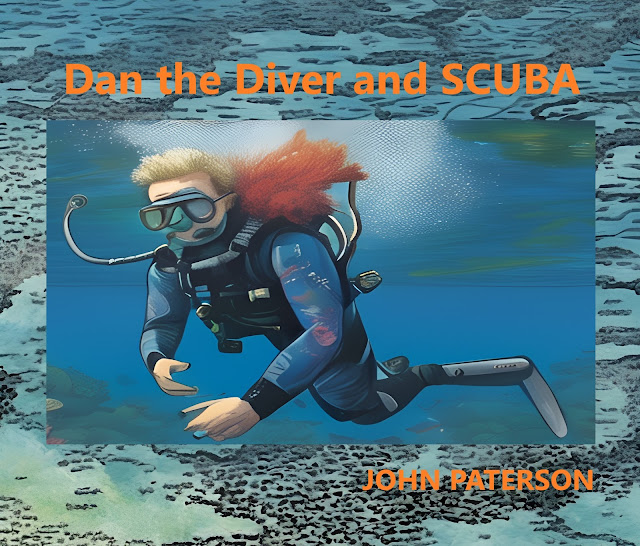
The Great Barrier Reef is amazing but we must always remember that we are in another world when we are underwater on SCUBA. We need to breathe air. Unlike the fish and corals, we carry our air with us in a tank on our back. “What’s happening with my air,” said Dan the Diver. “There are bubbles everywhere. I need to surface but not in a hurry.” Dan knew that air expands as it rises in the water and his lungs would do the same. He should be OK. “My gear got caught in a cave and my air hose was broken. Luckily, it was shallow as I couldn’t breathe at all.” Dan knew that if he had been much deeper, then he would need to decompress slowly which was impossible. Divers try to come up no faster than their bubbles but if Dan runs out of air, he has no choice unless he can buddy breathe. If he comes up too quickly from depth, he can get decompression sickness from nitrogen bubbles in his blood. Dan tells how shallow water blackout occurs when snorkelers hyperventilate by repeated deep breathing ...

Dan the Diver joins STEM Club

Image
  Legend has it that Dan the Diver was born in a giant clam shell many years ago when, along with trochus and tritons, these shells were being collected in large numbers and someone needed to speak up for them. We now know that babies aren’t born in shells. His mother had told him stories about a boat called the Northern Star and its days in the trochus fishing industry. It roamed the Reef from north of Cooktown to south of Mackay looking for shells from which to make buttons. As a baby, Dan learnt a lot about trochus fishing from his Uncle Albert, who had spent his entire life diving for these shells in Torres Strait and down the east coast of Australia. He had even been on the Northern Star with the notorious skipper Bully Hayes. On one trip, the skipper ended up on top of the reef. Luckily, the boat floated off next high tide. The shell landed in Cairns was 18 tons and was worth £4680 in the early 1950s. As you can see, this story could have ended up very much differently. Bully...

What we like to eat.

Image
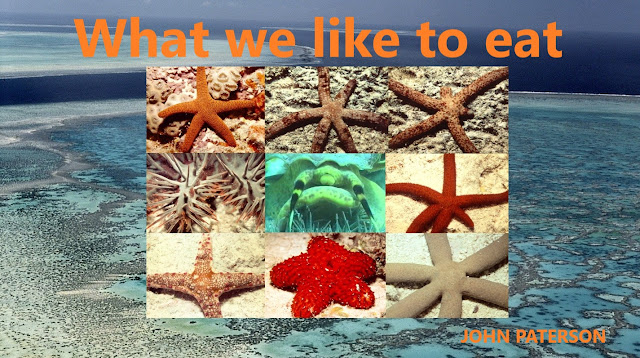
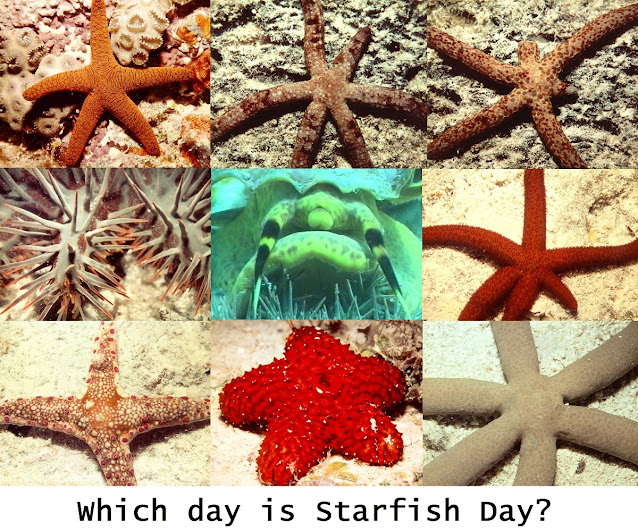
  Prey Preference It all depends on what we like to eat or maybe not. ”I’m going to put all you starfish in a cage with Triton and see which species get eaten,” said Dan the Diver. “That should tell us its prey preference. What could possibly go wrong?” “It all depends on what we like to eat,” said Triton “but remember that these starfish are poisonous, so leave them for me. One is even venomous, so don’t touch them unless you know the difference.” “I don’t mind eating you Elegant Starfish,” said Triton “but you are not much of a feed”. I know how to deal with your poisons and armor but unless I am very hungry, I wouldn’t bother.” “You both know what to do,” said Triton “you stay out of my way. You even hide under coral rubble in the shallows. Now-a-days, I stay away from there as divers and shell collectors love me for my shell.” “If I eat one of your arms, you will just grow another,” said Triton “You can just cast them off and get away. You hide under rubble in the shallows as w...

Don't Blame Me

Image
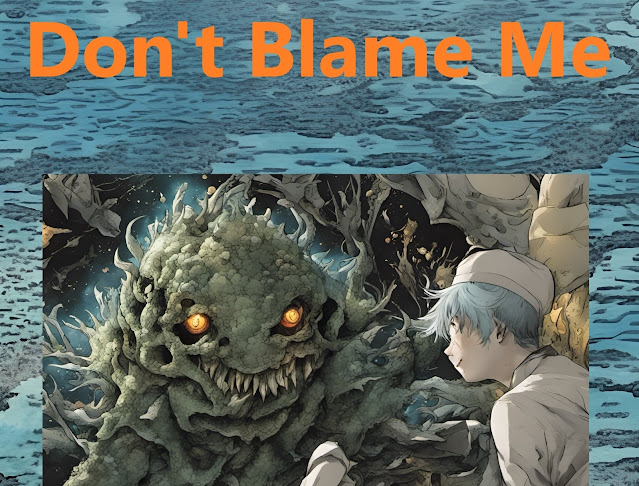
“Don’t blame me,” said the little boy. “The problem with our oceans is that they’re huge.” “That’s what I’ve been telling them for 60 years,” said Paddy the Starfish. “I’m just a baby, so don’t blame me” said Junior to Bubbles the slug. “The problem is up there”. “Something must have changed, but what was it?” said Angel Fish. “I suspect lots of things”. “I know that you’re talking about me,” said Thorny passing by quickly for good reason. “I know that you’re here somewhere, Thorny” said Dan the diver. “You can’t outrun me”. “You won’t get away next time Thorny,” said Triton. “Your days are numbered”. “That’s all right for you to say Triton,” said Nudibranch. “You have a shell and lots of food”. “And the more often Thorny gets away, the hungrier they are for me,” said another starfish. “I might only be a shrimp, but I can look after myself when it comes to Thorny,” “I don’t mind a Thorny or two,” said the Wrasse. “It’s really a question of what we like to eat.” “What do you mean by tha...

The Giant Triton: List the Giant Triton in Appendix 2 of CITES

Image
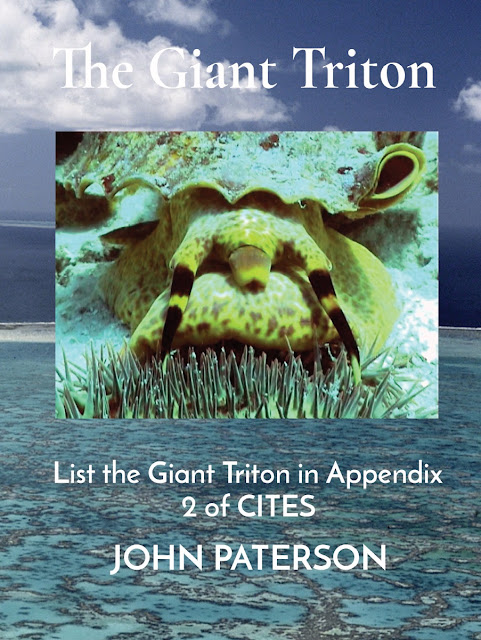
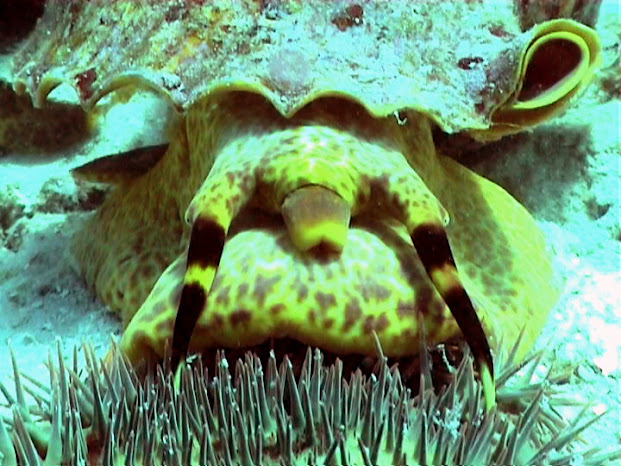
  While the giant triton may be protected on the Great Barrier Reef and elsewhere in Queensland, there is still no evidence this protection has resulted in restored populations of the giant triton. However, there is evidence of continuing illegal collection and trade in Indonesia where it is also legally protected. It is now worth reconsidering whether the existing local protection is sufficient or whether further international protection is required by listing the Giant Triton in Appendix 2 of the Convention on International Trade in Endangered Species (CITES). The giant triton ( Charonia tritonis )is a beautiful shell and a well-known predator of the crown-of-thorns starfish ( Acanthaster planci ). In many parts of the third world, it is still being collected in large numbers and sold to tourists as ornaments. As you admire the beautiful shell, spare a thought for the hungry mollusc that died. And don’t forget, they live on starfish. Many species of starfish are known to outbreak...

Charonia Research Digital Collection New

Image
  Miyake-Jima 1957 It's 1957 and Japanese scientists travel to the island of Miyake-Jima to study a strange disease affecting a coral reef. The island’s people have noticed a strange increase in the number of the large, venomous crown-of-thorns starfish. Over the following years they kill large numbers of the starfish attempting to protect the living coral upon which the starfish is feeding. The Japanese scientists noted that they had observed giant triton shells feeding on the crown-of-thorns starfish, in research published only in Japanese. 5 years later This same species of starfish is noticed in increasing numbers at Green Island, off Cairns here in Australia. Over the next five years, the starfish outbreak will consume much of the living coral at Green Island and other reefs in the vicinity. The giant triton is again observed feeding on crown-of-thorns starfish and research in Queensland is commenced on the feeding rate and prey preference of the giant triton. Tests ar...

Charonia Research Digital Collection

Image
 

Chatting with ChatGPT: The Collection 1

Image
PDF and Epub  and Audiobook available for free download from  Internet Archive

Persisters and Opportunists in an Assemblage of Coral-Reef Starfish

Image
PDF and Epub version are available for free from   Internet Archive

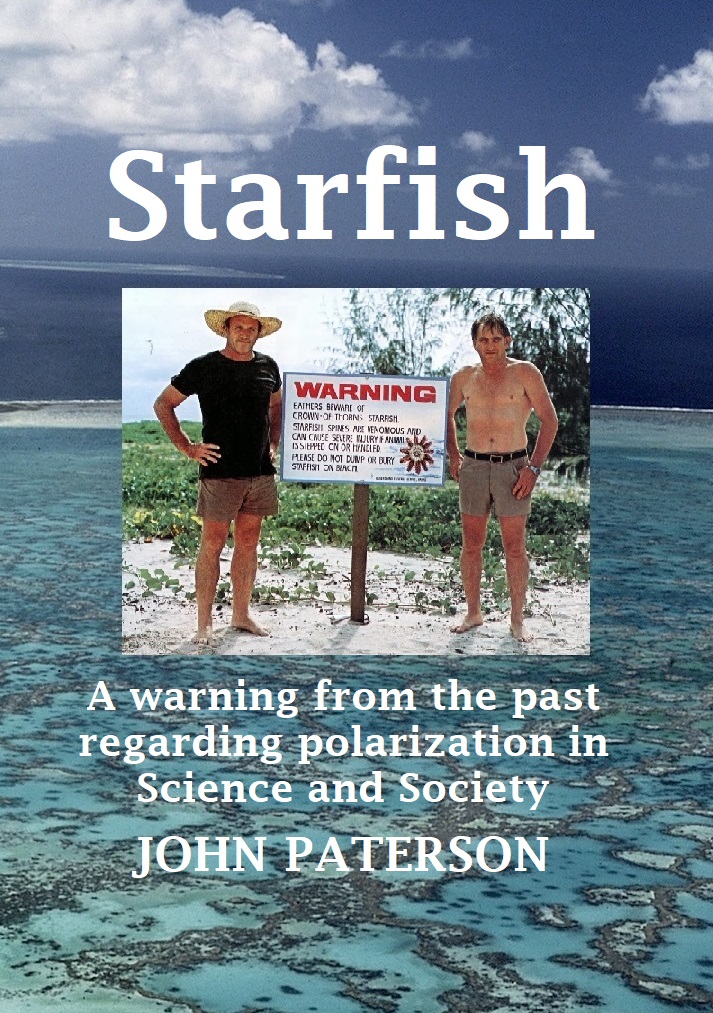
Starfish: A warning from the past regarding polarization in Science and Society

Image
PDF and Epub and Audiobook version are available for free from   Internet Archive

Report to GBRMPA (1986)

Image
  The attack of the triton elicits an escape response by the starfish which, if successful, results in rapid prey dispersion with the loss of only a few arms. The escape response varies in its successfulness and is heavily dependent on (1) size and hunger of predator, (2) prey size and degree of cumulative prey injury and (3) physical composition and relief of substrate. If the escape response is unsuccessful then the predator feeds on the starfish until the prey is either consumed (large predator-small prey) or discarded (small predator-large prey). Charonia tritonis will follow the scent of an injured starfish and resume the attack and subsequent feeding if hungry. When not in the process of prey hunting, capture or feeding, Charonia tritonis can appear inert. Under turbulent water-current conditions, the sensitive olfactory organ of Charonia tritonis can be disabled temporarily giving the appearance of random searching behavior. The distance over which Charonia tritonis can loca...

Coral Reef Starfish

Image
Ormond et al. (1973) discussed the consequences of spawning aggregations of Acanthaster and suggested that the increased proximity of adult starfish may enhance the chances of fertilisation, especially if synchronous spawning takes place. It was suggested by Lucas (1984) that a conspecific stimulus would induce synchronous spawning in Acanthaster planci and a delayed spawning activity in dispersed individuals of Acanthaster planci was observed by Okaji (1991). It was suggested that this delay reflected less frequent stimulus from conspecifics in dispersed populations compared with aggregated populations and that synchronous spawning induced by such stimulus would lead to higher rates of fertilisation when the animals formed an aggregation. Evidence of the existence of sexual pheromones in starfish was presented by Miller (1989). The effect of sperm dilution, adult aggregation and synchronous spawning upon the fertilisation of sea-urchin eggs was reported by Pennington (1985). Penningto...

List the Giant Triton on CITES

Image
List the Giant Triton in Appendix 2 of the Convention on International Trade in Endangered Species (CITES) . The Giant Triton ( Charonia tritonis )  is a beautiful shell and a well-known predator of the crown-of-thorns starfish ( Acanthaster planci ). In many parts of the third world, it is still being collected in large numbers and sold to tourists as ornaments. As you admire the beautiful shell, spare a thought for the hungry mollusk that died. And don’t forget, they live on starfish. Many species of starfish are known to outbreak in different parts of the world. Prior to human collection, the giant triton might have controlled starfish numbers not by eating the many, but by preventing the aggregation that precedes the outbreak. At present, little is known of any aspect of the triton’s ecology despite its obvious importance in controlling starfish numbers. Petition to List the Giant Triton on CITES .